Documentation
Complete and updated service and product documentation available for viewing and download. Select a category to begin your search.
InfoTeleves 78 (march)
- General Information: Engineering the Brand: we align Identity with technological leadership
- Our people: Arnaud Rivayran, Sales Specialist -Televes France
- Televes Corporation: Advanced electronics as a strategic pillar
- Product news: K21: The new generation of compact headends
- FAQs: Is European Conformity (CE marking) mandatory for telecommunications racks?
- Televes facilities: Denver International Airport expansion, Colorado, USA
- Televes in the world: CES, ISE and MWC
- Training: How to connect a shielded RJ45 female grip-type connector
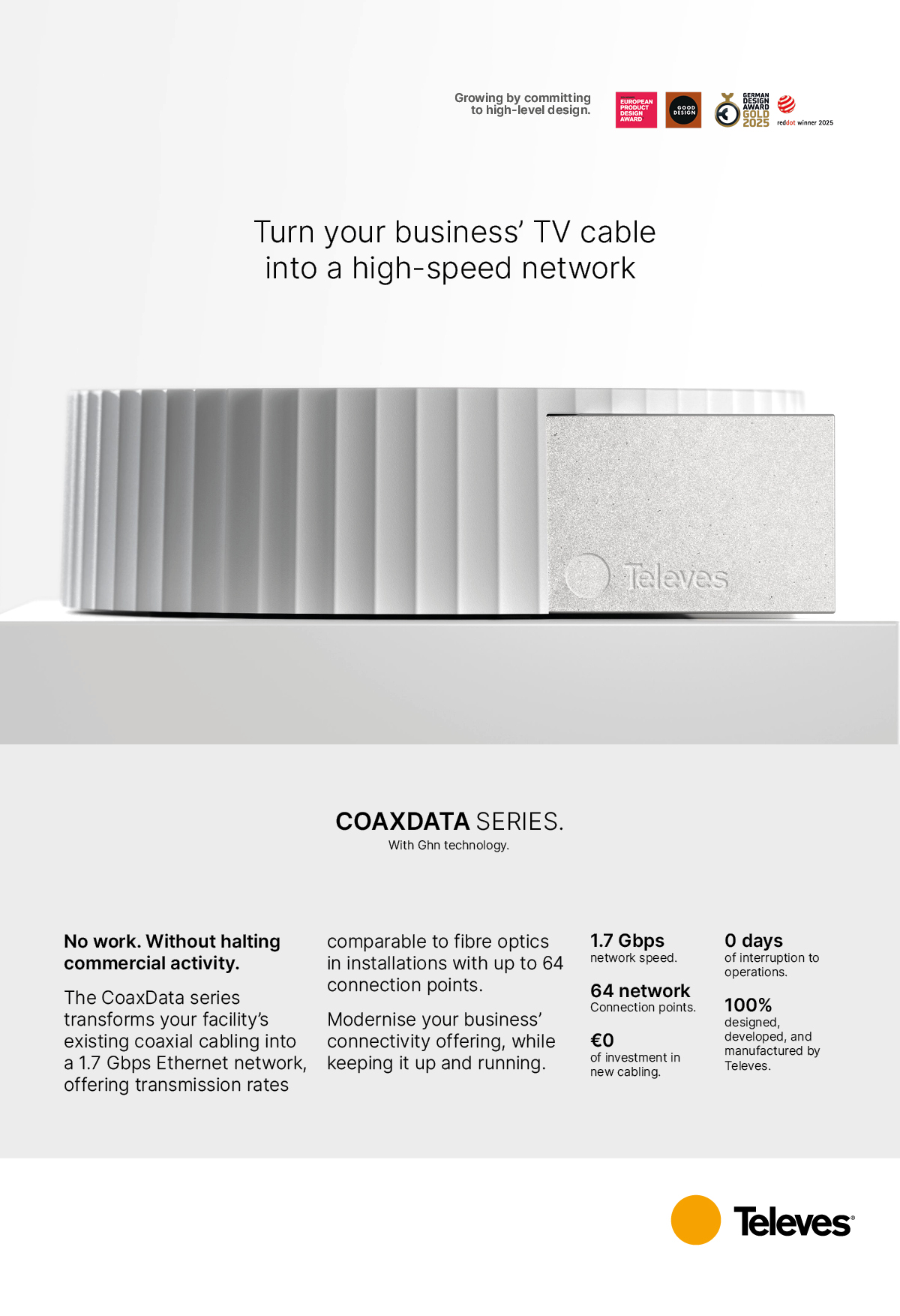
- Announcement: COAXDATA SERIES -Turn your business’ TV cable into a high-speed network
General Information
Engineering the Brand: we align Identity with technological leadership
Following the launch of a new corporate chapter announced in October, we now undertake a natural evolution of our brand. Just as we reinforce our leadership through renewed product design that conveys in-house engineering and manufacturing, we also needed to update how our brand presents itself to the professional market.
The new corporate identity, already visible at recent international events such as CES in Las Vegas and ISE Barcelona, responds to this logic: consolidating a more coherent, recognizable image aligned with our technological projection.
The orange dot, inspired by our historic satellite dishes and present in our most recent products, is now integrated into the logo as a structural element. This decision simplifies the brand and visually strengthens the connection between identity and industrial design.
In this new era, design serves as a strategic tool to convey innovation, precision, and reliability. Over the coming weeks, we will complete its rollout across all platforms and share the brand manual with our partners, collaborators, and communication contributors, providing templates and official resources to ensure homogeneous and rigorous application.
We’re launching a new phase in which design and engineering advance together to strengthen our technological position and brand coherence.
Our people
Arnaud Rivayran, Sales Specialist -Televes France
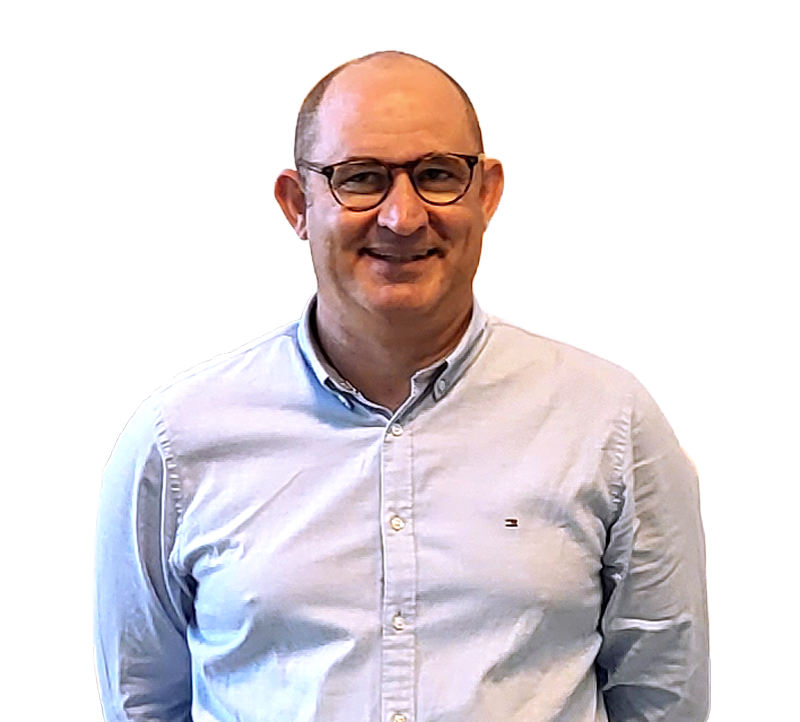
Designing and manufacturing in Santiago de Compostela gives us a competitive edge, always one step ahead of the market.
What does your job entail?
I’m responsible for business development in the Greater South of France for all business areas. My role combines prospecting, portfolio consolidation, and technical follow-up with both direct and indirect customers. I support them from the initial design phase through implementation, ensuring proper specification and optimal deployment of our solutions.
How long have you been with the company?
I joined in 2004. My background in telecommunications, electronic components, and low-voltage systems distribution has given me a cross-functional market perspective, which is essential for spotting opportunities and delivering added value.
What’s the most rewarding aspect, and what's the most challenging?
The most satisfying part is bringing Hospitality and RF distribution projects to fruition, especially when introducing our latest innovations. The most demanding aspect is managing multiple product families, which requires constant coordination with the different business areas.
What strengths would you highlight?
Our ability to design and manufacture in Santiago de Compostela gives us agility, production control, and qualified technical support that truly sets us apart in the French market.
Televes Corporation
Advanced electronics as a strategic pillar
Europe is at a turning point in microelectronics. Anticipating this shift, Televes Corporation has been strengthening its capabilities in MMIC circuit design, simulation, and assembly since 2010. This journey gave rise to TForce, the technological pillar of our TV distribution range and a testament to our sustained commitment to R&D.
Today, advanced electronics is the strategic axis of Televes Corporation.
Maxwell Atlantic, our PCB manufacturing division, is executing an industrial expansion plan focused on high-performance applications in the aerospace and security sectors, with demanding technical and regulatory requirements.
These PCBs require high-density HDI designs, advanced materials, thermal control, and proven reliability in extreme environments. To meet these demands, Maxwell Atlantic is updating its processes to state-of-the-art standards, incorporating new technologies, and expanding facilities to integrate capabilities and support growth.
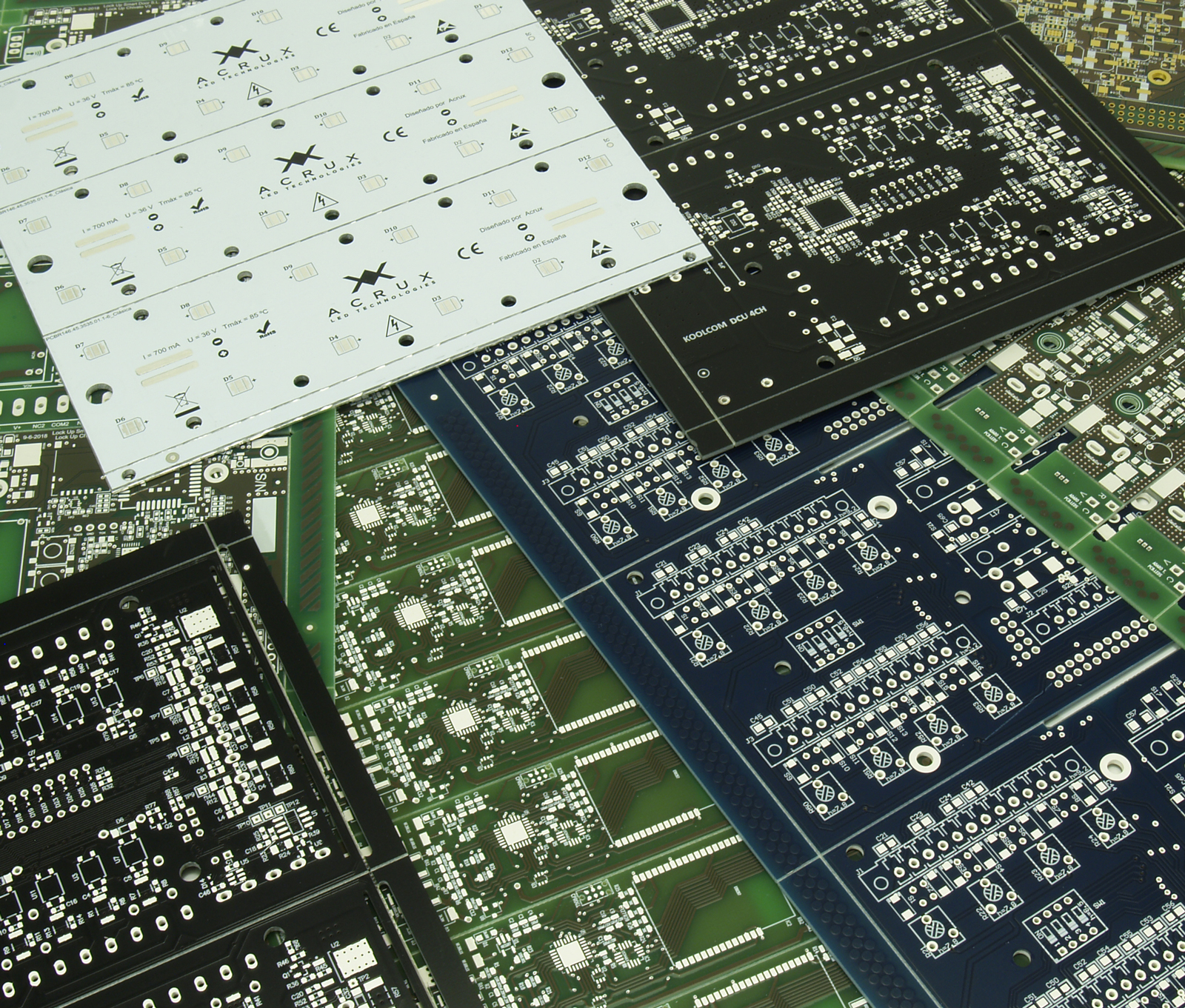
We are accelerating our industrial transformation in advanced HDI PCB electronics manufacturing for aerospace and security applications, consolidating our position as a key player in the sector’s value chain.
New equipment includes laser drilling machines, optical alignment drilling, and the new via filling process. This year, direct imaging for masking and a new etching line are being added to advance trace-space miniaturization.
The PTA, GILDA, and DRACO R&D projects reinforce our expertise in very high-frequency HDI and smart antennas with beamforming. Sales growth validates this investment: we are consolidating our position as a European benchmark in high-performance PCB design and manufacturing, and as a driver of advancement toward microelectronics.
Product news
K21: The new generation of compact headends
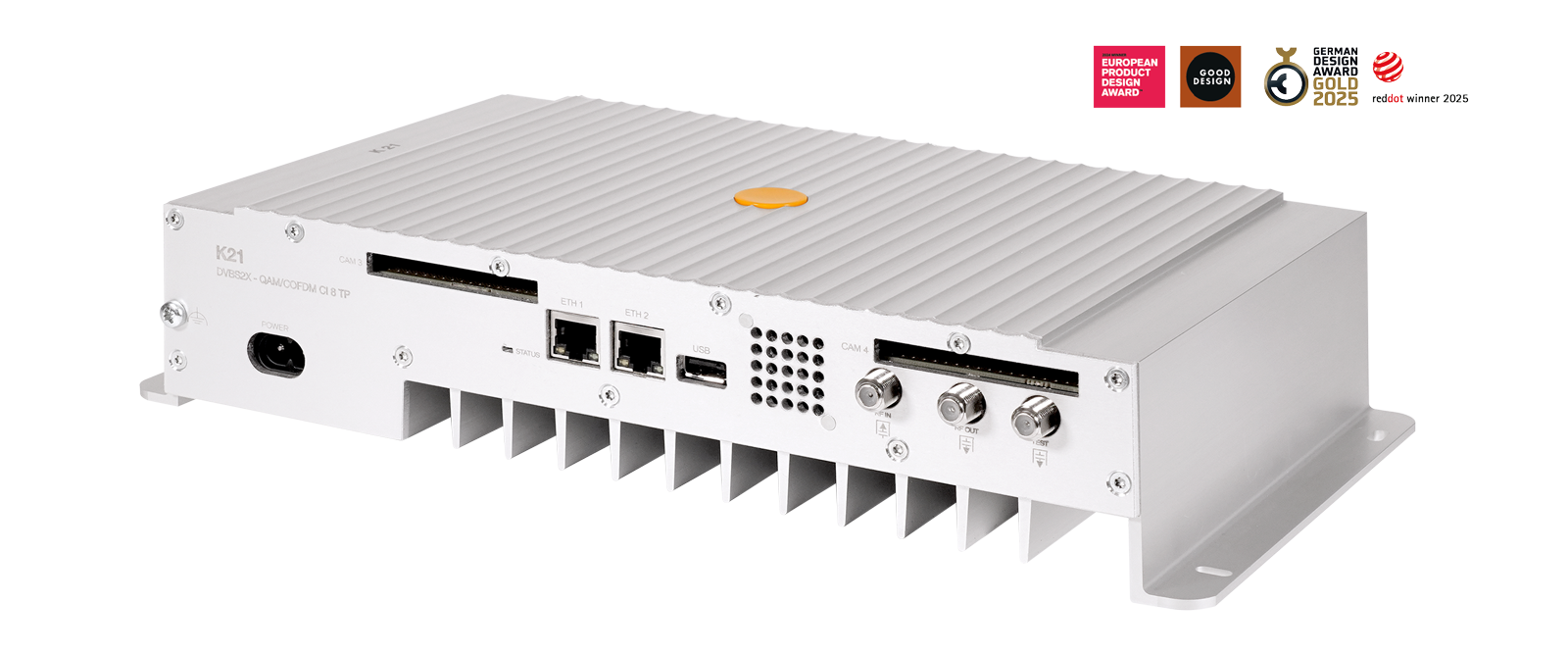
Collective television distribution in environments such as hotels, hospitals, and residential facilities is evolving at the same pace as user and operator demands. Today, professional installers need solutions that don’t just work, but that also optimize technical space, reduce commissioning time, and simplify maintenance.
With that goal in mind, we developed the new K21 series, a generation of compact QAM transmodulation headends that takes a step forward in operational flexibility and service control, while maintaining the robustness and reliability that have long defined our previous models.
The K21 generates QAM multiplexes from DVB-S/S2/S2X transponder services quickly and efficiently, reducing required cabling and shortening installation time. The entire system is managed through an embedded web interface, accessible from PC, smartphone, or tablet, enabling fast, intuitive configuration through preloaded profiles and installation cloning functions.
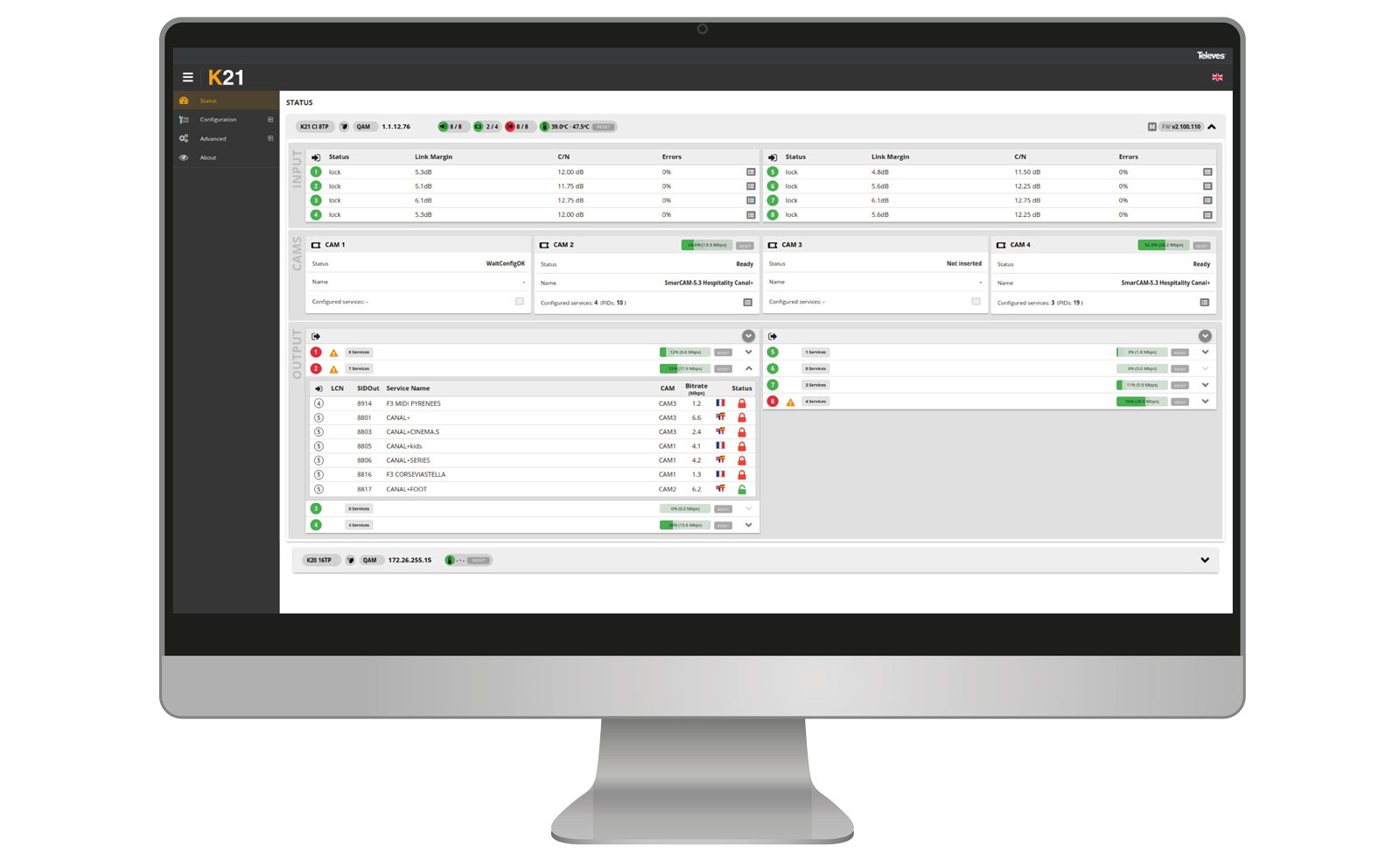
Satellite-to-QAM transmodulation with greater operational flexibility and advanced service control
One of the most significant evolutions in the range is the addition of service decryption and flexible remultiplexing in the 570321 reference. Thanks to its four Common Interface (CI) slots for CAM modules, installers can work simultaneously with multiple encrypted services, select necessary content, and reorganize it according to each project’s requirements. The result is a fully customized channel offering for every installation, with a high degree of control and personalization over distributed services.
Additionally, the entire K21 series includes features designed for demanding professional environments: scalable architecture through linking two headends-even combining K21 units with its predecessor K20-output level up to 98 dBµV for large distributions, and complete service control with SID/PID filtering, editable LCN, and optional EPG.
The mechanical design has also been optimized. The chassis, with internationally recognized renewed visual language, integrates a large rear heatsink and internal active ventilation, ensuring efficient thermal management and stable operation even under continuous working conditions.
Overall, the K21 series represents a clear evolution in the compact QAM headend concept: more control over content, greater installation efficiency, and new possibilities for television service delivery for the professional who wants reliability today and room to grow tomorrow.
FAQs
Is European Conformity (CE marking) mandatory for telecommunications racks?
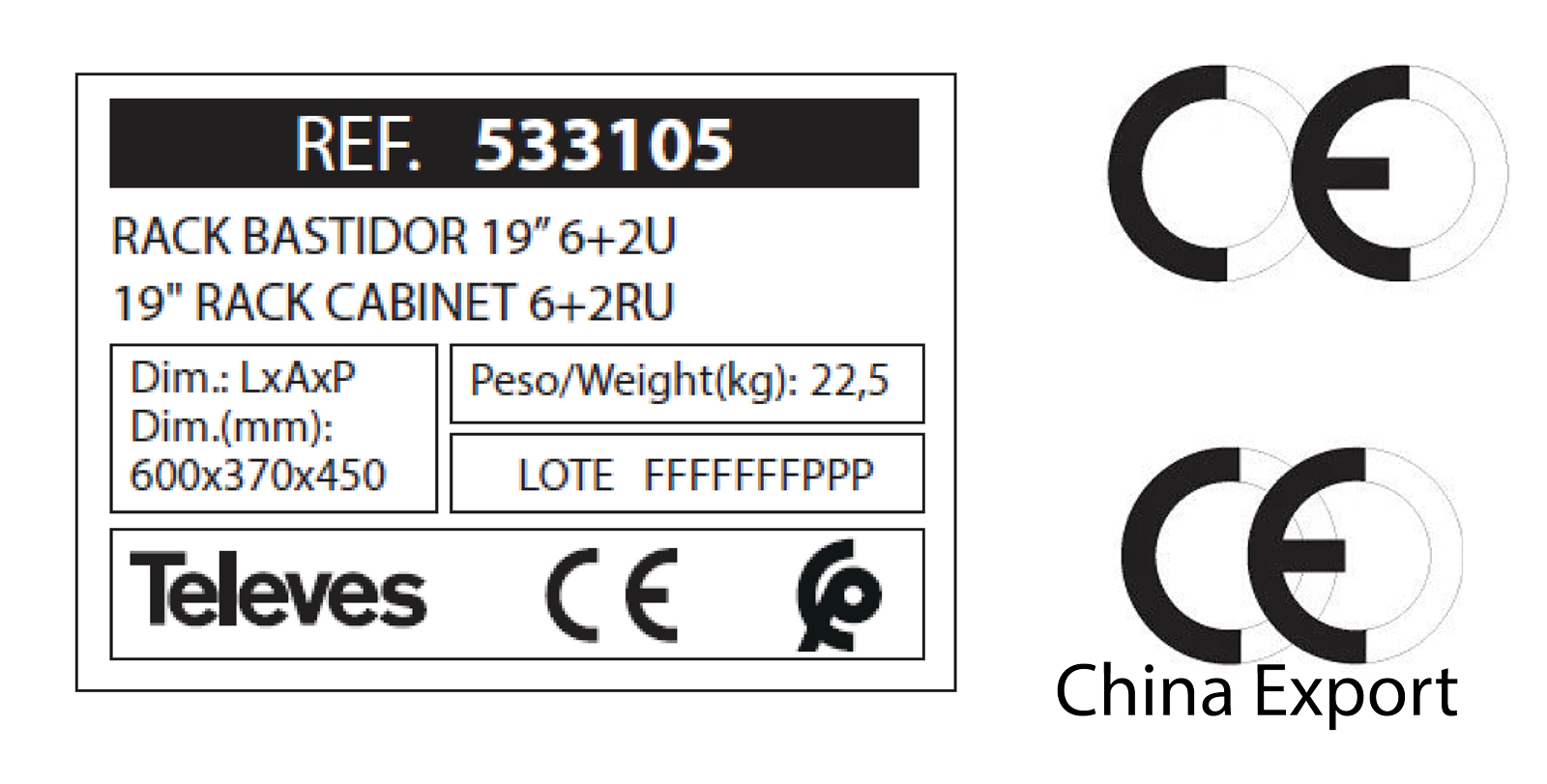
Yes, CE marking is essential for telecommunications racks. The rack is not a simple mechanical element of telecommunications infrastructure, whether in residential, professional, or public use environments. It houses electrical equipment, so safety and regulatory compliance are not optional.
In the European market, CE marking guarantees that the rack meets essential safety and quality requirements for commercialization, in accordance with the Low Voltage Directive (LVD 2014/35/EU) and standards such as:
- EN 62208: mechanical strength, stability, and load capacity.
- EN 60529 (IP): protection against dust and liquids.
Be careful to distinguish similar symbols from actual CE marking (such as “China Export”), which do not certify regulatory compliance, only manufacturing origin. For the professional, verifying this point is not a formality: it is a matter of safety, responsibility, and installation reliability. In our case, we develop racks that comply with European standards, because reliable infrastructure starts with the elements that support it.
Televes facilities
Denver International Airport expansion, Colorado, USA
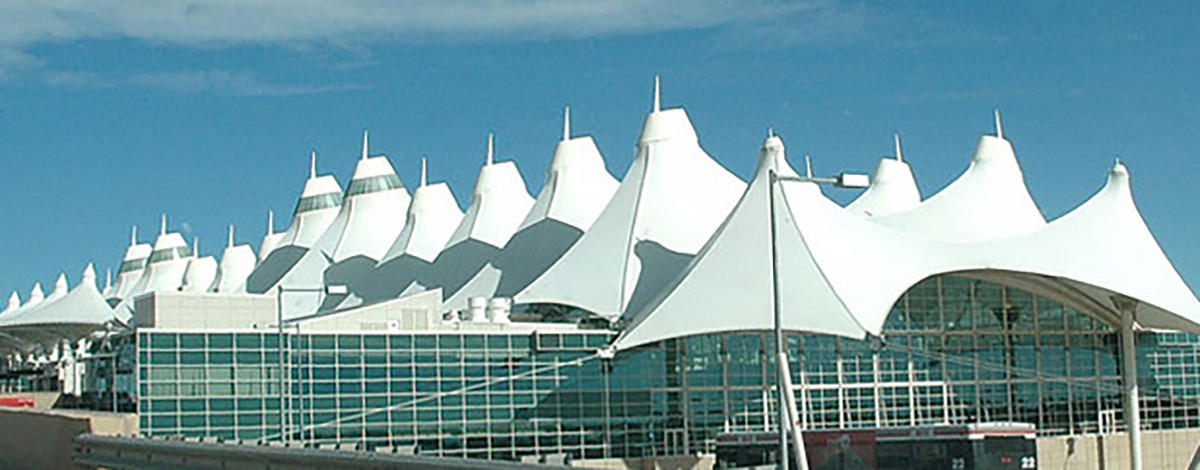
This is one of the world’s busiest airports, and we have expanded our audiovisual infrastructure to provide continuous access to information and entertainment to more than 82 million annual passengers. The installation incorporates two Avant X antennas and ATSC/QAM transmodulators, enabling insertion of local channels on all screens in common areas, from terminals to waiting areas and retail spaces.
The signal integrates with the existing satellite-to-QAM headend and feeds a FiberKom optical transmitter, delivering content to remote areas of the airport. This solution ensures homogeneous coverage, efficient distribution, and optimized management in a complex environment with multiple networks and providers, ensuring a high-quality digital experience throughout the terminal.
Televes in the world
CES, ISE and MWC
CES | Las Vegas (January 6-9)
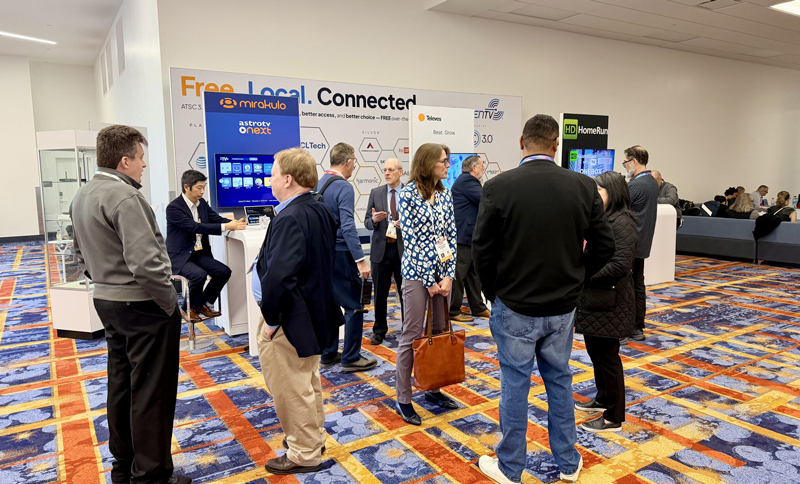
We were present at the world’s leading technology innovation event, sharing space with ATSC. We presented advances in broadcasting and NextGenTV, marked by the appointment of Javier Ruano, Director of Televes USA, to its Board of Directors.
ISE | Barcelona (3- 6 February)
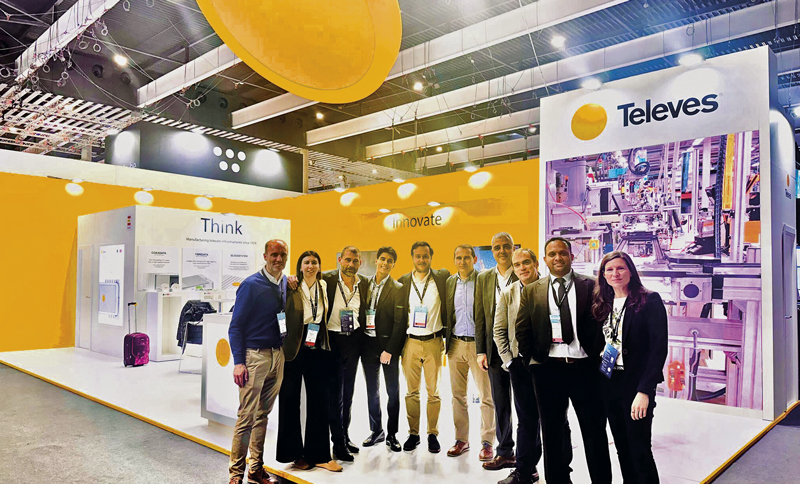
We presented our vision of connectivity in professional environments, promoting the television as an active node of the hotel’s digital ecosystem, with the evolution of ArantiaTV and its native multivendor integrations for Hospitality.
MWC | Barcelona (March 2-5)
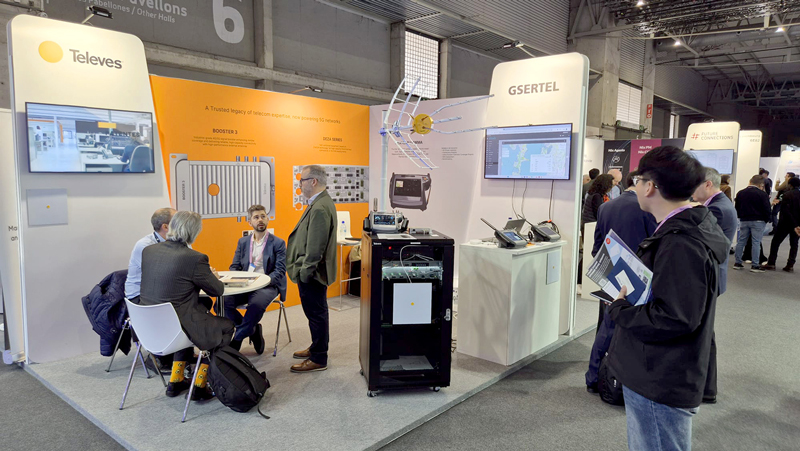
We showcased our comprehensive ecosystem for 5G indoor and remote area amplification: Hexylon meters, optimized antennas, and characterized solutions, ensuring predictable and controlled mobile coverage right to the service point.
Training
How to connect a shielded RJ45 female grip-type connector
Grip-type connectors are attached to the cable by closing together two moving parts found at the back of the connector. These parts function like two jaws that bite down on the cable when closed, producing the necessary attachment.
With this type of connector, the crimping is performed with the pressure created by closing the two parts onto the cable by hand. There is no need to use any specific tool to attach the wire pairs to the pins.
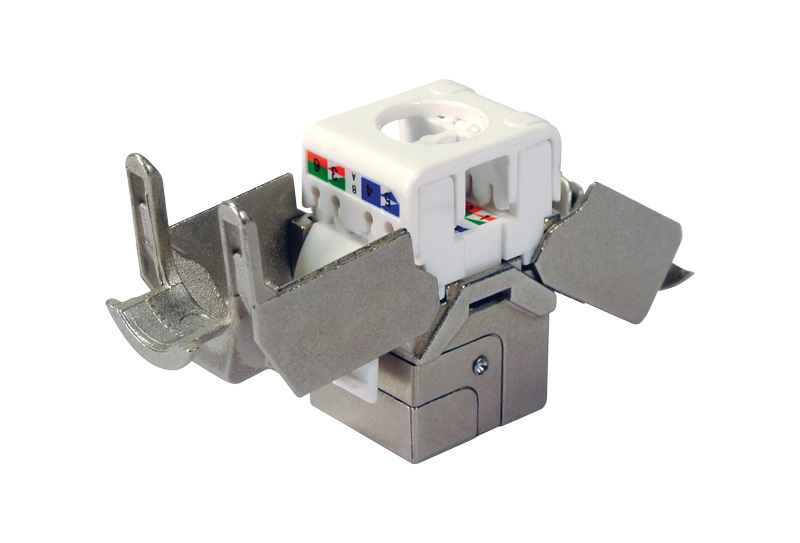
This connector type is attached in a simple manner:
1. Strip the cable.
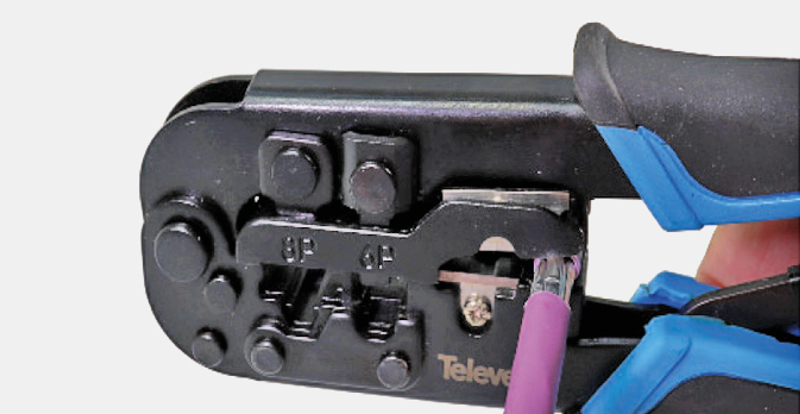
2. Separate the inner piece from the connector.
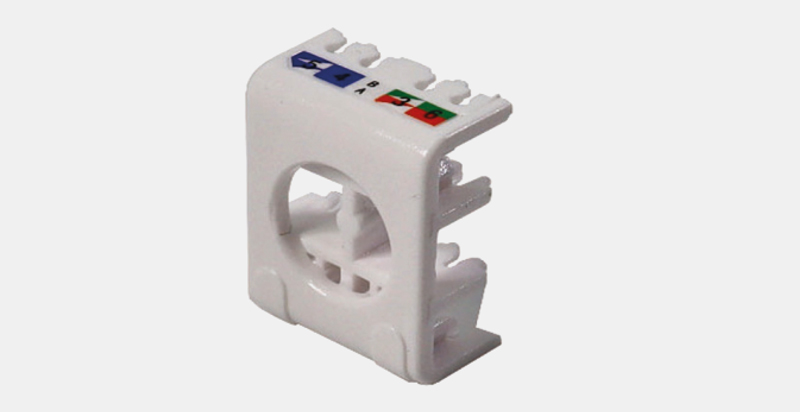
3. Insert the wire pairs into their proper locations, following the TIA‑568 A or B standard.
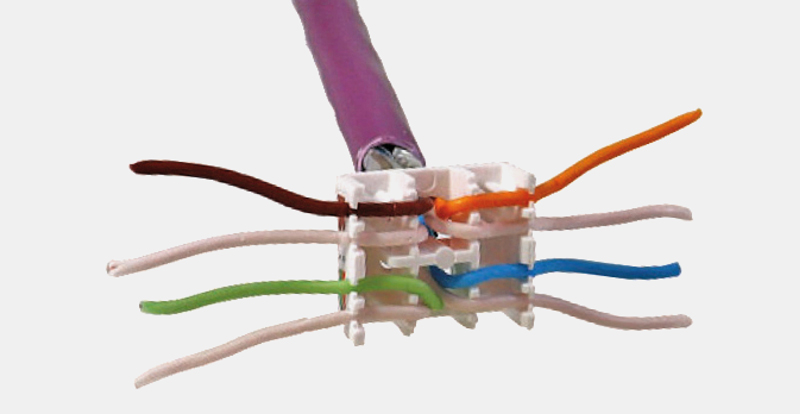
4. Trim the excess wire.
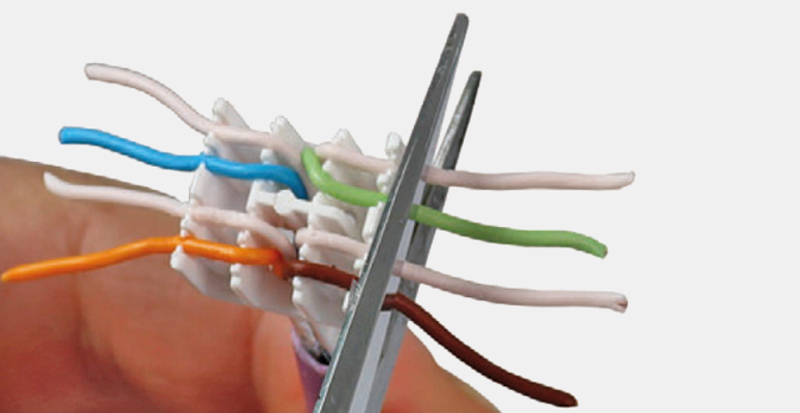
5. Reattach the piece with the wires to the rest of the connector. If a shielded cable is being used, the shielding material must be folded back so that it makes contact with the connector.
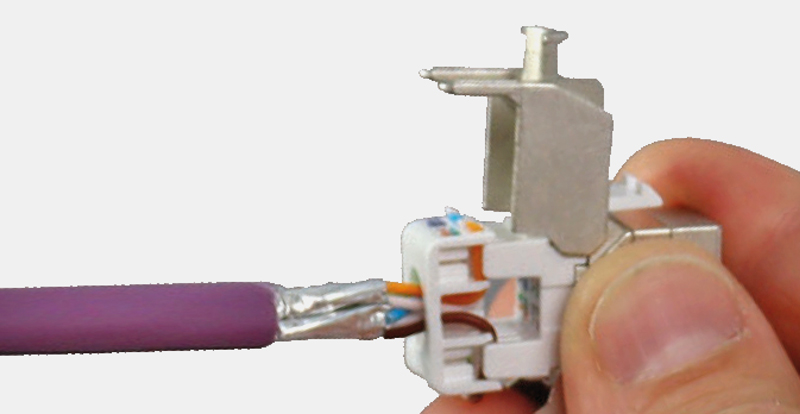
6. Firmly close the connector to perform the crimping.
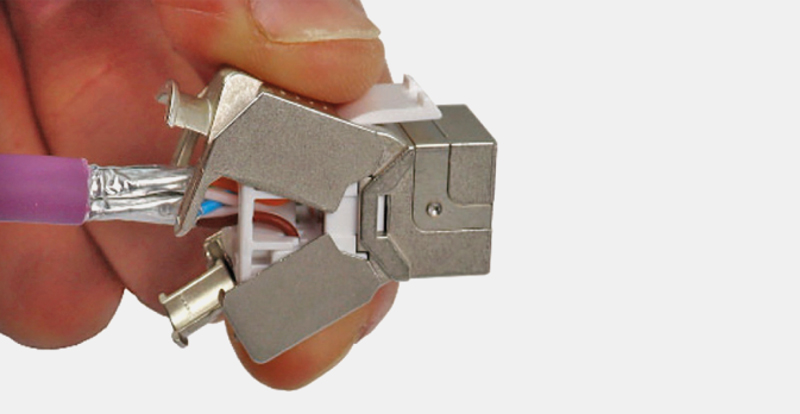
7. If you are using a shielded cable, wrap the drain wire around the end of the connector and make sure proper contact is made. This step is not necessary with U/UTP cables.
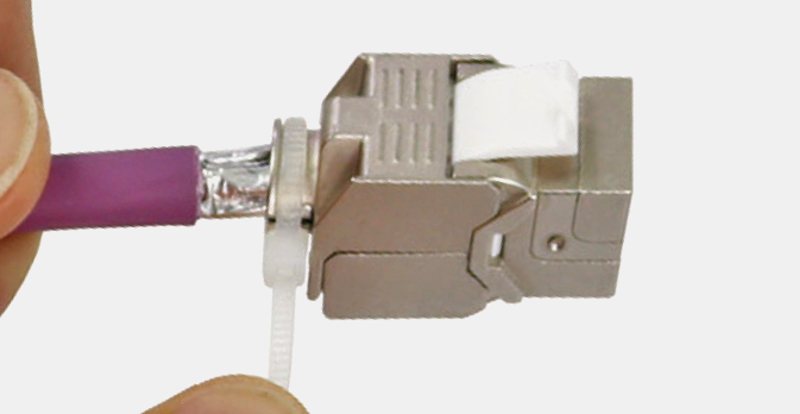
8. Use a plastic cable tie to make sure the connector is firmly attached, then trim the end of it.
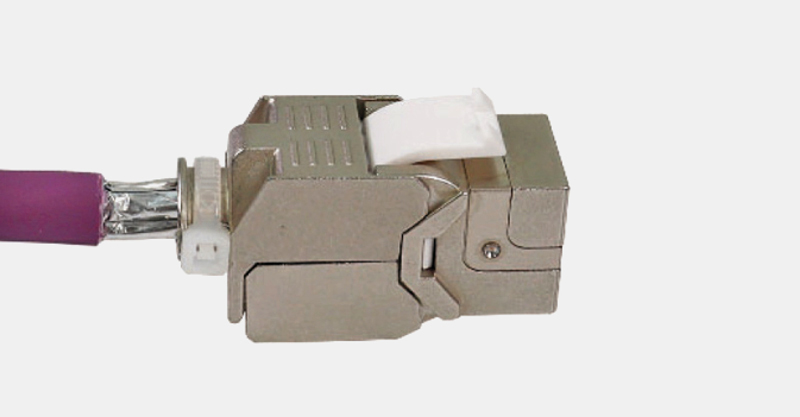
The result is a clean termination with high quality that provides reliable connection.
For step-by-step instructions, you can watch our video on how to attach a grip-type female RJ45 connector to a shielded data cable.
Watch video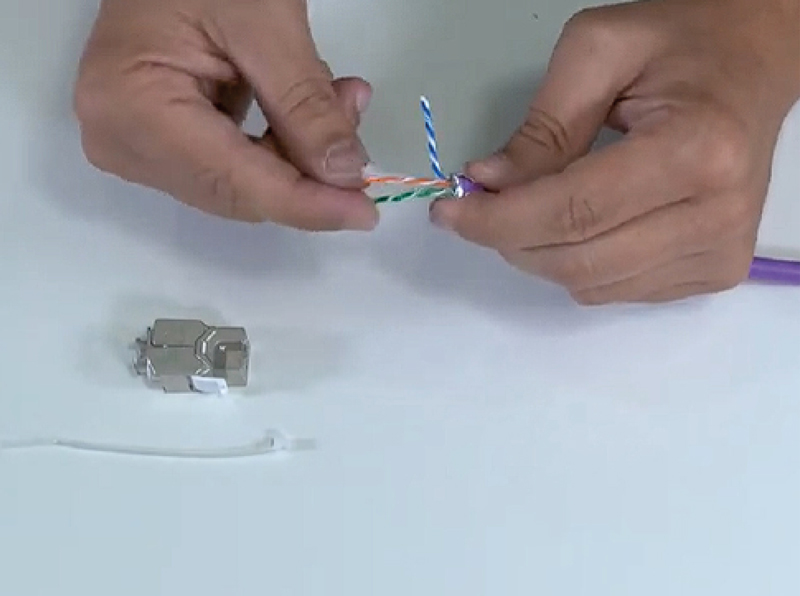
Announcement
COAXDATA SERIES -Turn your business’ TV cable into a high-speed network